
A concept for clinical trial interviews
Live interview support, with a recording to review afterward.
We’re exploring a new use for Pythia Pro: helping a clinical interviewer catch a missed follow-up during the interview, and giving authorized reviewers a recording to return to afterward.
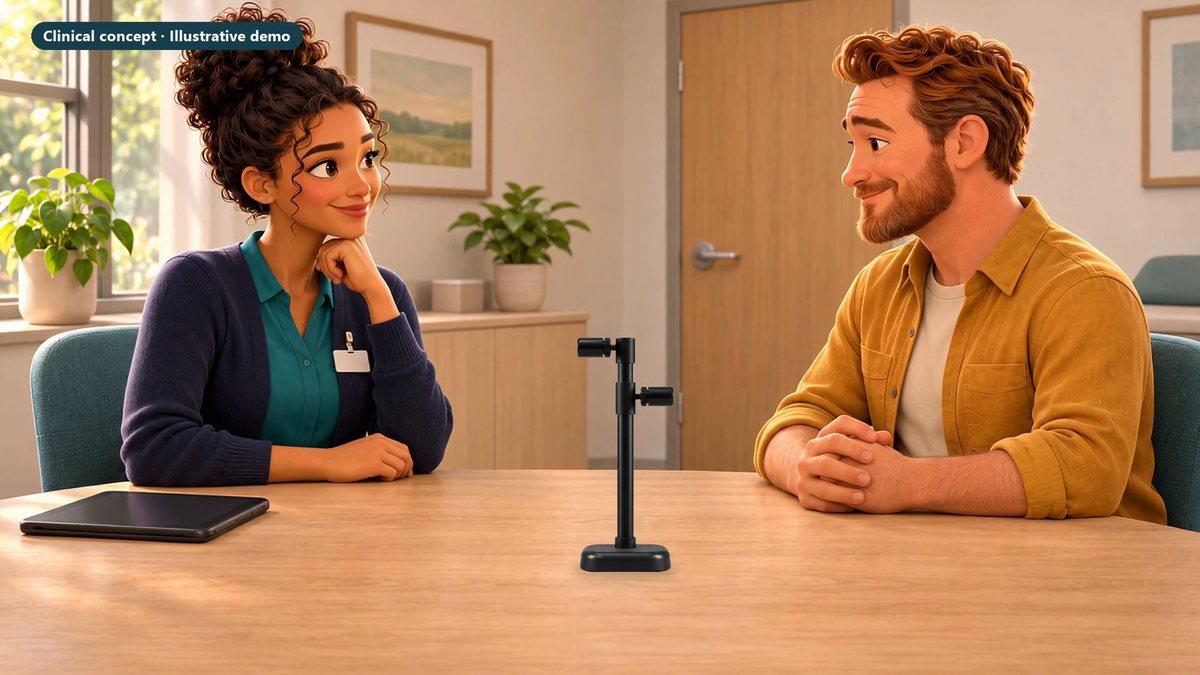
Captions are built into the video. Sound plays when you press play.
This is a concept. We’re looking to test it with the clinical research community. The video is an illustrative demo with simulated camera views and no patient data.
How it would work
Support in the moment, and a reference afterward.
- 1Before the interview
Consent and study approval come first
With the participant’s consent and the study’s approval, Pythia would capture both video and audio of the interview.
- 2During the interview
A private reminder, not an interruption
An API would connect the device to clinical research software. That software could check the conversation against approved questions and send the interviewer a private reminder, such as “Review the required follow-up.” The interviewer decides whether to act and keeps the conversation moving.
- 3After the interview
A recording to return to
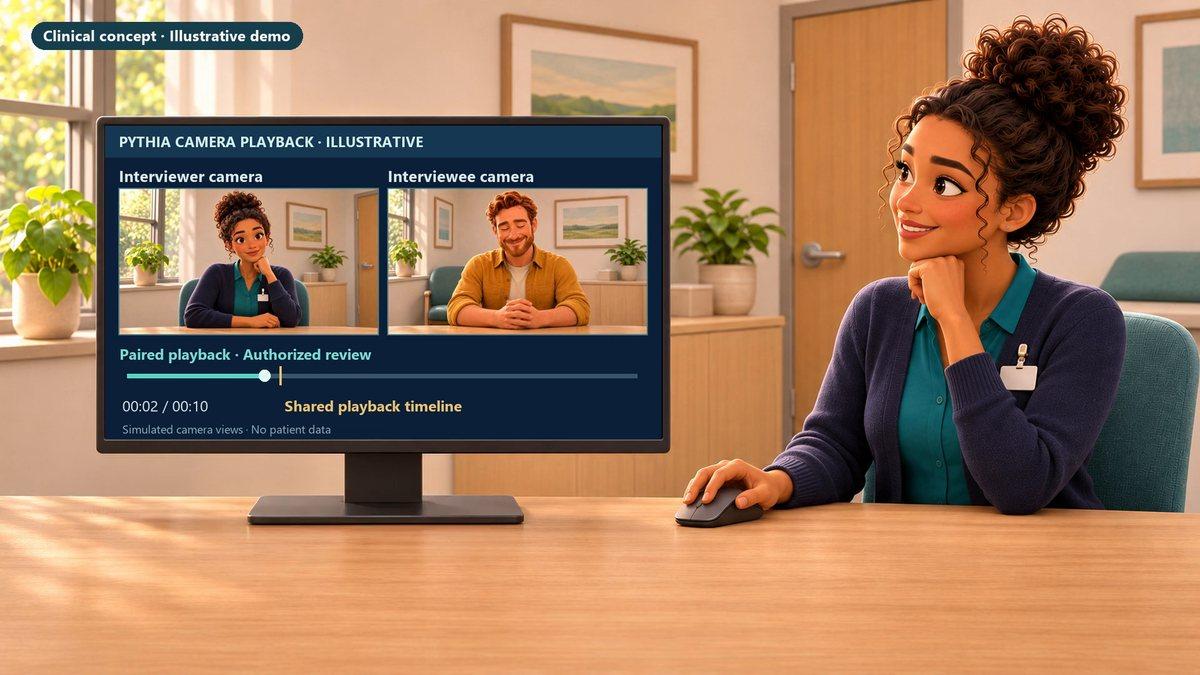
The approved recording could be stored in that software for authorized review. Audio preserves what was said and how it was said. Video adds a view of how the interview was conducted.
Where it could help
Three ways a study team might use it.
Live support
A private reminder during the interview when a required follow-up may have been missed. The interviewer chooses what to do.
Interview review
Authorized reviewers could replay a specific moment, check whether required questions were covered, and compare the documented assessment with the recorded conversation. That could help investigate possible interviewing or scoring errors.
Interviewer training
With permission to use recordings for training, supervisors could show interviewers specific examples, explain where a follow-up was needed, and give focused feedback for future interviews.
Official study records
Where recordings are included in a study’s official records, they could also support sponsor audits and FDA inspections. That requires appropriate consent, reliable systems, secure access, and proper record retention.
Guardrails
The clinician stays in control.
Pythia would support the interviewer, not replace their judgment.
- The interviewer decides whether to act on a reminder.
- The system wouldn’t decide who qualifies for a trial.
- It wouldn’t tell a participant how to answer.
- Recording would happen only with the participant’s consent and the study’s approval.
Share your feedback
Where would this be most useful?
Pick the use that fits your work best. It opens an email to our team, where you can tell us more about your studies and what you would want answered first.
Something else on your mind? Email info@pythiascorecard.com.
Prefer to talk it through?
Pick a time for a short conversation with our team.
Read the video transcriptShow
What if a clinical interviewer could catch a missed follow-up, and revisit the conversation after the participant leaves?
We’re exploring a new use for Pythia Pro: live interview support, with a recording to review afterward.
With the participant’s consent and the study’s approval, Pythia would capture both video and audio. An API would connect the device to clinical research software, where the approved recording could be stored for authorized review.
During the interview, that software could check the conversation against approved questions and send a private reminder: “Review the required follow-up.” The interviewer decides whether to act and keeps the conversation moving.
Afterward, the recording becomes a reference. Audio preserves what was said and how it was said. Video adds a view of how the interview was conducted.
Authorized reviewers could replay a specific moment, check whether required questions were covered, and compare the documented assessment with the recorded conversation. That could help the team investigate possible interviewing or scoring errors.
With permission to use recordings for training, supervisors could show interviewers specific examples, explain where a follow-up was needed, and give focused feedback for future interviews.
Where recordings are included in the study’s official records, they could also support sponsor audits and FDA inspections. That requires appropriate consent, reliable systems, secure access, and proper record retention.
The clinician stays in control. The system wouldn’t decide who qualifies for a trial or tell a participant how to answer.
This is a concept we’re looking to test with the clinical research community. Where would this be most useful: live support, interview review, or interviewer training?
Share your feedback with Pythia Scorecard.